Wine from 300 to 713 metres up Olympus.
Three plots on the schist above Rapsani, co-fermented the way the appellation asks: Krassato, Xinomavro and Stavroto, grown and picked together. Tastings on Saturdays, April to November.
Contours every 40 m, drawn from open elevation data. The summit of Lower Olympus is at 1,562 m; the old Rapsani railway station, down in Tempe, is at 23.
One blend, three altitudes
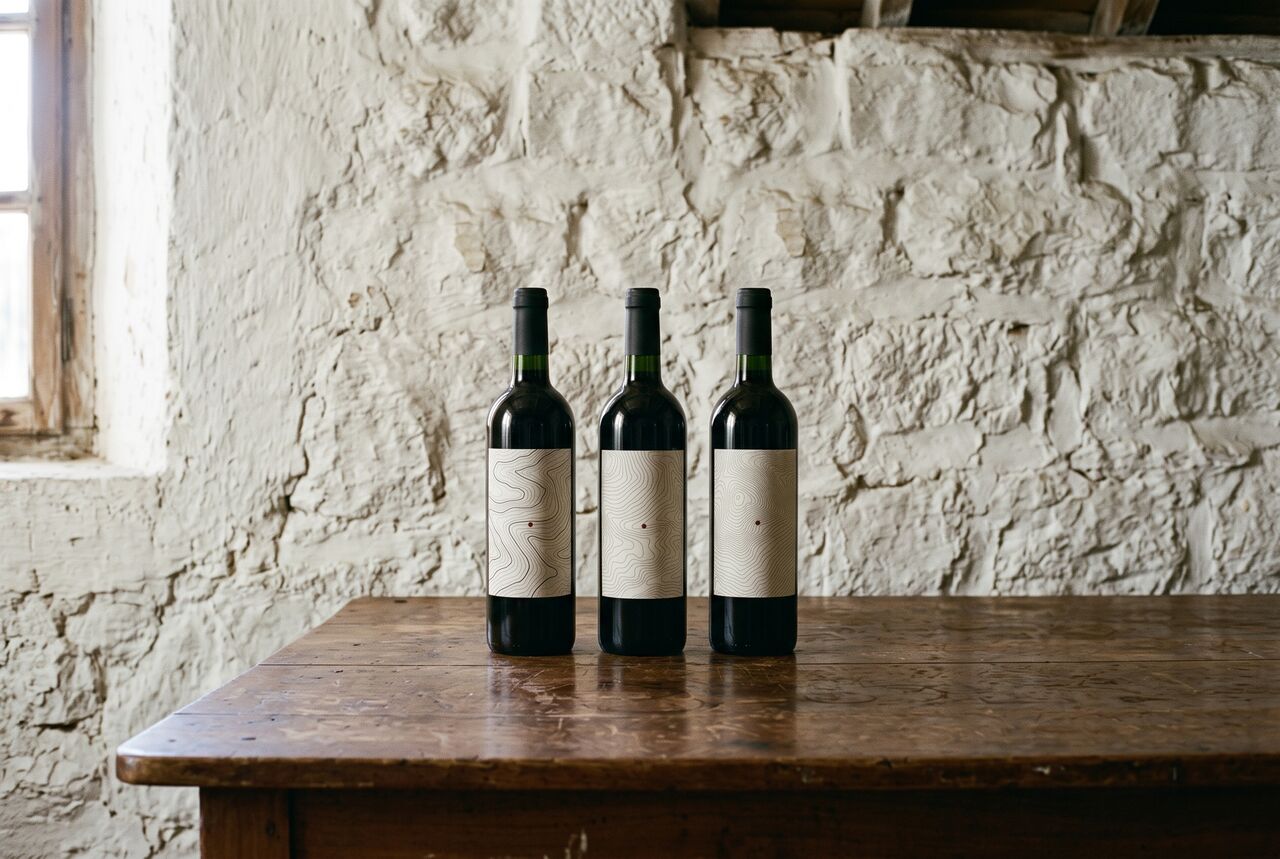
The same three grapes grow on every plot, so the only thing that changes is how high up the mountain they are. Each label is printed with its own plot's contour lines, 20 m apart.
Planted together, picked together
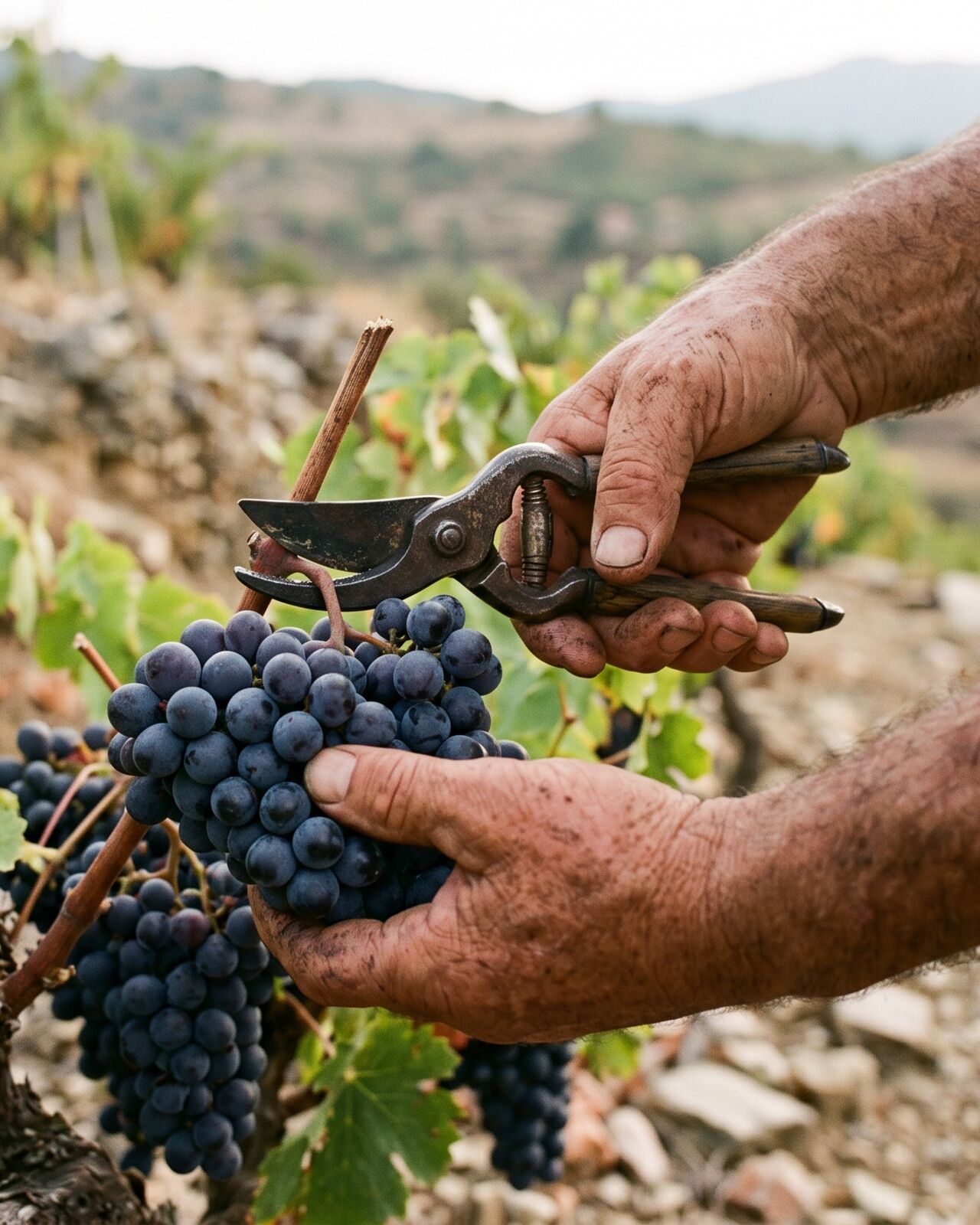
The Rapsani appellation is one of the few in Europe that asks for a field blend. At least a third Krassato, at least a third Xinomavro, the rest Stavroto, all fermented in the same tank. Our grandparents planted them in the same rows because that was how you planted a vineyard here.
- Κρασάτο⅓ or moreKrassato. The local grape, pale and perfumed; it gives the blend its red-fruit nose.
- Ξινόμαυρο⅓ or moreXinomavro. Tannin and acid; the reason the wine keeps for ten years.
- Σταυρωτόthe restStavroto. Dark colour and spice, and the first to ripen.
The valley below, in 1590
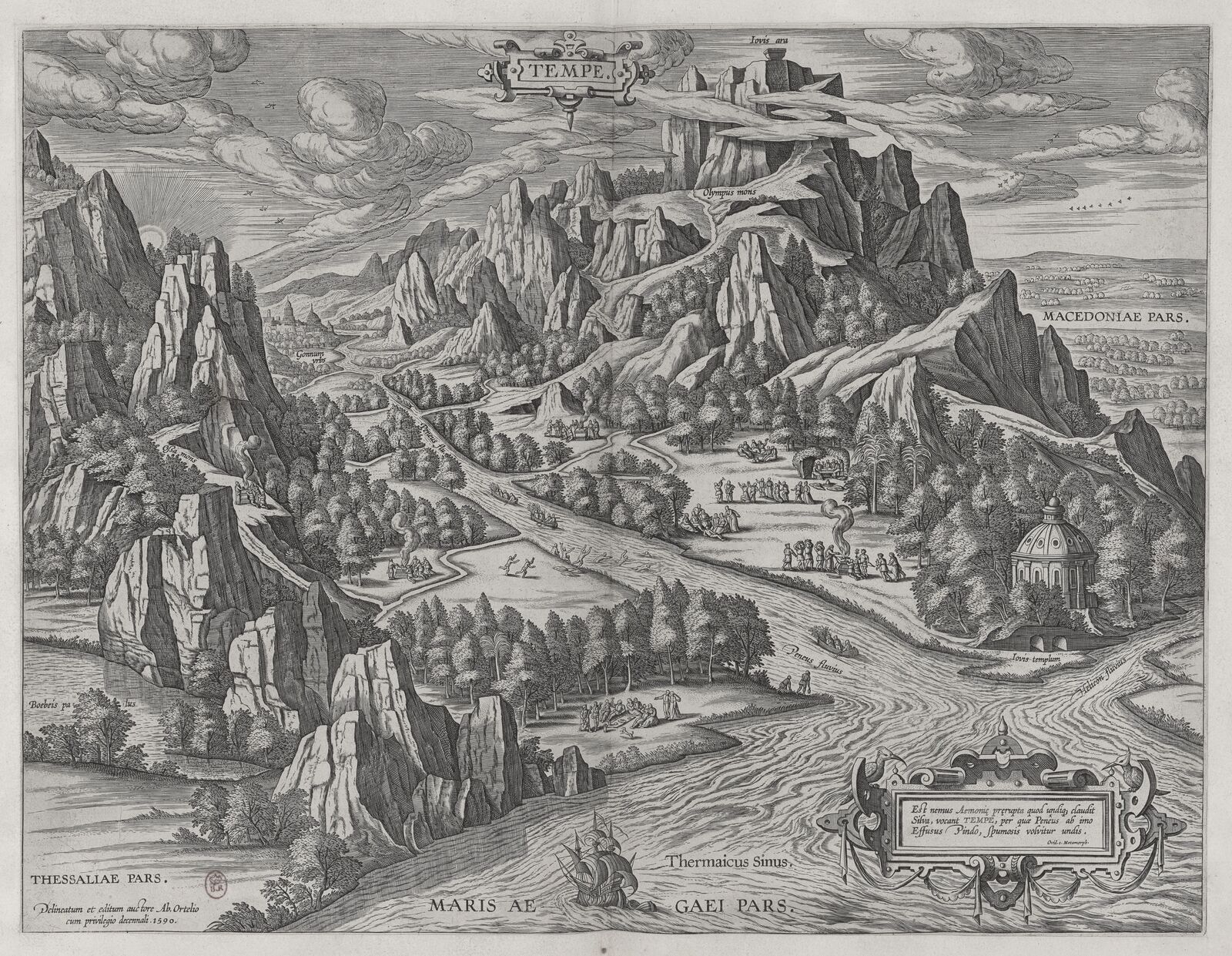
Ortelius drew the gorge under our vines as a paradise: the Peneus winding to the sea, a temple in the trees, Olympus mons above it all. The river still runs there. Our plots are higher up the slope, about where he drew the clouds.
The harvest climbs the mountain
Higher up, the grapes ripen later, so we pick from the bottom up: Κάτω Λάκκα first, Πεζούλια three weeks later, often in the first rain of October.
The day each vintage was picked, one plot per morning.
Visit on a Saturday
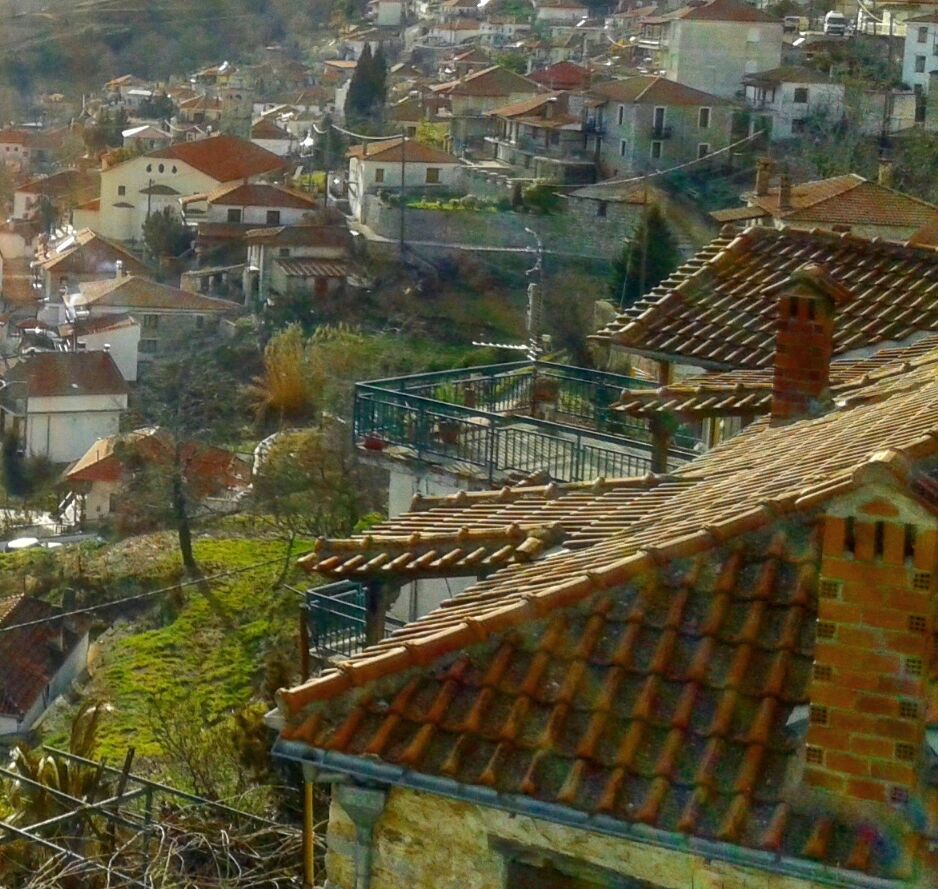
Tastings at 11:00 and 17:00, April to November, in the old press house at the top of the village. Four wines, one of them from the barrel, and in dry weather a walk up to Πεζούλια.
- Price
- €18 a person, 90 minutes
- Group
- Up to 10; larger groups on weekdays
- Getting here
- 25 minutes from the Tempe exit of the motorway. Park at the upper square. Map ↗
- Phone
- 2495 000 000
- info@aniforos.example
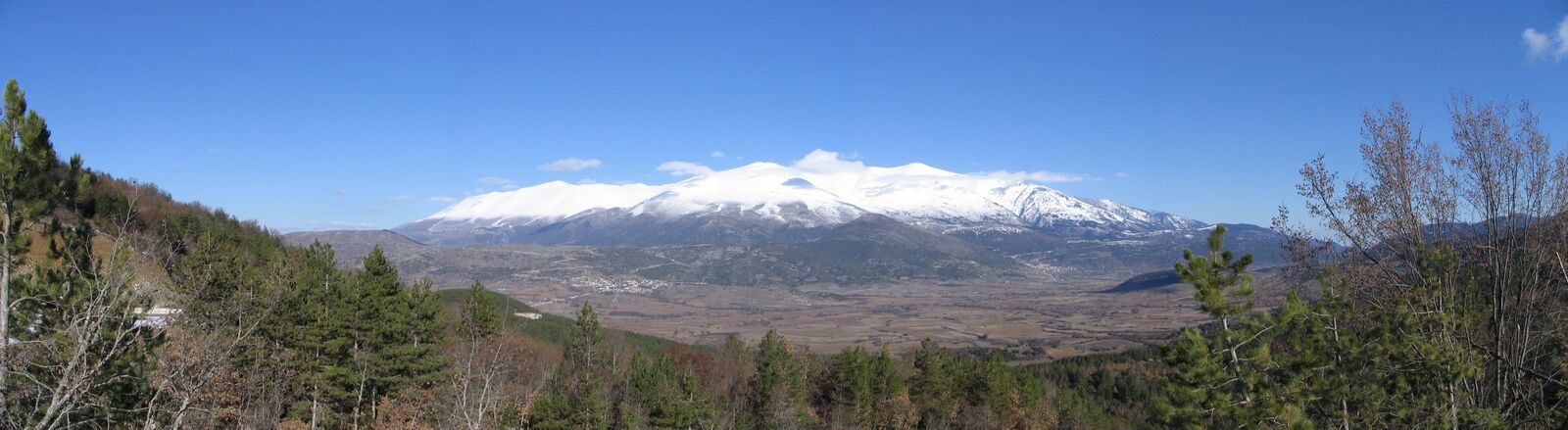
Rapsani from the north-west. Photo: Haidi Pantazi, CC BY-SA 4.0
From the journal
- Pezoulia, in the first rain
The last plot came in on a drizzly Saturday. This year's crop is small and dense.
- Alonia: the village harvest
The middle plot sits next to the houses, and every year whoever walks by comes to help.
- Kato Lakka in one morning
The lowest plot, picked by eleven, and the first must of the year smells of strawberries.
Where it's poured
At the estate, and at Kyma, a fish taverna on the water at Afissos, Pelion, which serves our Αλώνια by the kilo.
AI image